Showing posts with label teachable moments. Show all posts

Thursday, September 30, 2010

We now return you to your regularly-scheduled programming.

Here's why people think I'm a freak =)  Although...truth be told: my kids think that Sesame Street only airs at Papa's house so they do get to watch it once or twice when we're there.  Other than that, they think the tv is for watching UCLA sports, nothing else =)

Here's a terrific article from the Greater Good Science Center that might help you better understand me =)
(i.e., pretty please stop arguing with me that my kids "need to learn about this stuff sometime"...they will.  when it's developmentally age-appropriate.)


_________________________________________________________________
Weighing the pros and cons of introducing television into our household

  
Dear readers,
As I write this, I am waiting for the cable guy (or cable person, as the case may be).  I haven’t had regular Internet access since June 17th, not that I’m counting.  So the cable person is coming to install a landline (no mobile phone service here, either), Internet, and, um, possibly cable TV.
I kind of want it. I haven’t had a TV hooked up for years.  Although I do take a smug pleasure in saying, “My kids don’t watch any TV,” I’m sure this is more annoying than inspiring.
People often say to me, “Don’t your kids feel left out that they don’t get to watch the shows that the other kids are watching?”  I honestly don’t think that they do feel left out, though they are only 7 and 9, so this may change.
To me, here are the pros of having television:
  1. It would be fun to watch cooking shows with my children; maybe it would inspire them to spend more time in the kitchen with me.
  2. If there is a show that all the other kids are watching (American Idol) it’d be fun to watch this together.
Although there is a tiny bit of evidence that some shows are, indeed, educational, clearly time spent reading or in other activities is a zillion times more beneficial developmentally, so I’d put educational shows in a neutral category—not really a “pro” of watching TV, but certainly not a “con,” either.
Here are the cons of television, for my family:
  1. TV takes time that kids could be playing, reading, socializing or doing other, more developmentally beneficial activities.
  2. My kids always seem really cranky after they’ve been watching TV.
  3. Currently my kids are great at entertaining themselves by drawing, playing outside, and by playing with their pet rats (sounds gross, I know, but those pets are a positive thing).  I’m afraid they’ll lose this self-entertaining skill if they can do something that takes less effort, like watch TV.
  4. TV may create a new battle-ground: “can I watch TV” begging.  I certainly know how to create limits (my mom only let my brother and I watch a half hour of TV per day) but I think my kids will still ask, beg, and cajole me to make exceptions.  I can also limit this behavior by taking away TV if they do it, but then I will have created a complicated new system ripe for arguments.
  5. Even if I’m super-controlling about which shows the kids are allowed to watch, TV can have a pernicious effect on our perceptions of race and ethnicity.  New research shows that watching how black characters are treated on TV tends to affect people’s attitudes about race both consciously and unconsciously, and usually not for the better.  Why would I want to let actors’ and producers’ prejudices influence my kids?
  6. Moreover, and I think this is my biggest concern, the influence of commercials, product placement, and celebrities—especially if my kids’ heroes are endorsing a product or style just by wearing it—is not happiness-making.  Consumption and materialism are in large part learned; the materialistic culture often represented on television creates beliefs and behaviors that ultimately make kids dissatisfied (and whiny) rather than joyful.

Tuesday, July 20, 2010

Digital Children's Library

Check this out the next time you think you'll fall over if you have to read The Mine-O-Saur one more time..  Online Library

Monday, June 14, 2010

Not what it was meant for...a different kind of repurposing..


On each of the boys' beds I have this little basket from IKEA filled with appropriate board books or cuddlies. I liked them for two reasons - 1) matched the Russian orphanage nursery decor and 2) they are flimsy, yet sturdy, with a simple and safe zipper closure diagonally across the bottom.

Since the nightmare of Poopgate 1.9 and Mr. P not coming home this past weekend to reassemble the disassemble- so-it-can-be-scoured crib, I've been juggling 3 kids between 1 bed and 1 crib. NOT FUN.

Tonight it took Spike a bit longer to fall asleep and just as Trilogy was drifting off on our bed I heard Spike call for me with a wimper and a slight scream.

Ran in there to find....

He had put his head through the zippered bottom and was stuck. Since I didn't come right away, he had resigned himself to this new sleeping position and was sucking his thumb with his head on the bumper.

Scared the crap out of me. As I'm lecturing him on how unsafe and dangerous that was and how much it scared Mommy, all he could think of was "More mi Mommy." I guess if you think it's your last meal, it might as well be something you love.

Thursday, June 10, 2010

Safety Q&A with Gavin DeBecker

I've heard his name a dozen times. Mostly with regards to celebrities and stalkers, especially Tom Cruise.

But a few months ago, Mr. P brought home an excerpt about intuition and looking for danger signs from this book. I was hooked.

Not that I have stalkers or anything, but why can't I be as informed about my personal safety as say, Cameron Diaz?

Macaroni Kid, a local kids' activity newsletter, had a Q&A session with DeBecker and I am so interested in reading his other books now. Especially because I had a heated debate with my father and 3 younger brothers tonight about why I was upset that Curly saw a preview for the new Tom Cruise/Cameron Diaz thriller. A preview with guns. And explosions. And blood.

Why should I have to explain a decision I'm making NOT to expose my kid to violence?
Maybe that explains why my brother left the birthday gathering early to hang out with his friends and why the others were on their iphones most of the time that my kids and I were there. No values for what's important in life - family. Rather than edge-of-your-seat action that makes you numb to all other feelings.

Pay special attention the part about sleepovers. Brilliant.

Enjoy!

Tuesday, June 8, 2010

"The beauty of sharing our history is that our children can learn the easy way what we learned the hard way."

Wow. For more inspiration, chcek out yet another great post on Zen Family Habits. I love #2 the most. If my kids only knew what went on in my head all day long...uh-oh!

Monday, April 19, 2010

Orange you glad you eat well?!

Ever since starting the CSA, I've had a new interest in making dinner. My mom worked full-time and still had the energy to put a four-course meal on the table every night. I loved eating her pasta sugu, her porkchops, stuffed artichokes and especially Breakfast-for-Dinner! I hated that she wouldn't let me drink my glass of milk until I was all finished with it, but I loved the majority of what she made. Except beef stroganoff. Yuck.

When I moved into an apartment with roommates in college, we set up a system where we each cooked for the 4 of us one week-night and didn't have to worry about anything but eating the other 3 nights of the week. Sweet!

Sour. Well, sheepishly sweet for me, but probably still sour for them. Their moms all stayed home with them while they were young and, for the most part, cooked from scratch. So did mine, but she still had a realistic relationship with Hamburger Helper.

(Our "Orange" meal from last week. We hit all the food groups - even had an orange jelly bean to show how little sweets we "need."

So one of my first presentations for my dinner debut was just that. Cheeseburger Macaroni. To this day, they tease me about how, um, healthy, and happy that meal was. I think 2 of them had never heard of Hamburger Helper. Or Pop Tarts.

For my birthday that year, they presented me with a hand-made cookbook with all their recipes written out on cards along with memorable quotes of our year together. I treasure that book. For the memories it brings, but also for the dinner ideas and simple ways to make something special for your family. Recipes calling for 5-7 ingredients and not a little time. I've added my favorites from my mom as well as a few from my mother-in-law and some close friends.

When I started cooking for Mr. P, I was so excited to use some of these recipes. He ate them. He also started insisting on cooking more and serving less. I didn't get his new obsessions with portion controls. And who doesn't want applesauce and a starch with their meal? My mom was an expert at providing a healthy-balanced dinner so I assumed I had to do the same. How dare Mr. P risk his health and my ego but refusing his carbs?

When I got pregnant with our first son, he started eating less of what I made, I started throwing up more of what I made and my cooking days were numbered. Mr. P gladly took over (for various reasons) and I let him. Happily. I'm embarrassingly admitting that up until last year, I probably cooked once or twice a month for almost 3 years...toddlers don't require "cooking" and most of my vegetables were frozen from Trader Joe's. Not unhealthy.

Enter the preschooler, the husband who isn't available to cook and time. Well, I don't have more time, just more motivation. I have two real eaters in the house now, besides myself and $15 a week going towards the most deliciously fresh picked vegetables in Orange County.

Even I am blown away by all that I've conquered in the past 3 months - kale, bok choy, swiss chard. The list goes on and on. So does my receipt from Trader Joe's where I do 99% of our shopping now. I cook with fresh ingredients, often using a "starter" from TJ's (whole grain mix, turkey meatballs, etc.) Lunch is rarely PB and J and can even be handfuls of samplings from each food group.

We've been talking every day about the 5 food groups and "eating a rainbow" each day. Something that I have taught first graders for over a decade but didn't take to heart until I was teaching it to and feeding it to my own precious boys. When the CSA box comes each week, I let them sit on the kitchen counter and help me sort, wash and chop up the "vegetibles" as Curly calls them. We've been to the farm twice, most recently for a strawberry tour. This past week, Curly asked me if we were adding "green onions" to our lunch as he pulled them out of the fridge! Green onions! My kid knows what a green onion is! Jamie Oliver would be proud! (Love that show, by the way. SO inspiring).

I also put handouts in a clear, plastic sleeve and we cross them off with a dry-erase marker each night. This one from MyPyramid.gov will personalize it based upon your child's weight, height and age. Brilliant. Here's another one.

The boys are benefitting and so am I. Healthier eating and a healthier relationship with food for a healthier LONG life.

Won't their roommates LOVE me? =)

Friday, March 5, 2010

Parenting Fail

Last night Curly yelled at me because I wouldn't give him any more food after he went to bed. When I finally pulled him out of the bedroom (after 1 1/2 hours of trying to get him to sleep) and gave him ONE sausage link, he told me that he didn't like me.

Scratch that, he YELLED that he didn't like me.

This afternoon he commented on a character in the book "Llama Llama Mad at Mama" who was being mean to his mama - "That's not good. I would never be mean to my mama."

I'm lucky he still loves me enough to forget starving =)

Monday, February 22, 2010

Mom, Can My Invisible Friend See Himself?

Ironically, Curly, our oldest, has been mentioning a friend from school, Benjamin, being around the house during free-play, dinner time and naptime. I wasn't worried in the slightest and used it as a teaching moment to "remind" Benjamin about the rules in our house. This came to my in-box today.

Imaginary Friends

Why pretend playmates are good for children's development.

by Heather Turgeon

February 22, 2010


0

I

t's a sunny day at the park. Susan and her three-year-old daughter, Emily, are swinging happily, chatting about friends and the day's preschool activities. "Mom, don't forget to push Cartoons!" shouts Emily. Mom sidles up to the empty swing beside them and gives it a few good shoves. Cartoons is Emily's baby sister. She lives in Alabama with her mom and dad and she likes stuffed animals and rattles. And she happens to be invisible.

Imaginary friends used to be a cause for concern, but research is finding that kids with elaborate tales of friends who aren't really there are getting ahead in learning and social development. So what makes children who dream up pretend playmates so advanced?

Studies Show Imaginary Friends have Real Benefits

In the days of Dr. Spock, imaginary friends were seen as a symptom of social problems. If your child was spending her time talking to thin air, prevailing wisdom said she probably needed more attention and company. Seen as a way to deal with loneliness, stress, or conflict, imaginary friends had a bad rep for most of the 20th century.

But the tables have turned, with psychologists touting pretend friends as boosters for language and social skills. Last year a study from La Trobe University in Melbourne found that three- to six-year-olds with imaginary friends were more creative and socially advanced. Earlier studies had shown that kids with imaginary pals use more complex sentence structure, have richer vocabularies, and get along better with classmates.

The explanation? Kids who create a playmate get a chance to practice taking both sides of the conversation. They try on different roles, think abstractly, and conjure up original ideas. An elaborate fantasy world is like a test lab for some of the most important childhood skills.

How Imaginary Friends Affect Brain Development All pretend play is critical for brain development.

The regions of the brain that make imaginary friends possible — among them the prefrontal cortex and medial temporal lobe — start picking up signals around eighteen months of age, and they tap into some of our most advanced, higher-order thinking. When you hear your toddler make a chu chu noise with his train, this is your first clue that abstract thought has begun. It's no coincidence that the birth of pretend play synchs up with children recognizing themselves in the mirror — these are skills that mean our little monkeys are becoming conscious beings.

The Message for Parents

In all the excitement over imaginary friends, though, the real message seems to have gotten lost. It's not that made-up playmates are the key to success (no need to start nudging our kids to "get to work and make up an invisible friend"). What the results really suggest is that all pretend play is critical for brain development. When kids create worlds in their heads, they're flexing vital regions of the brain, and if we want their imaginations to really run wild, kids need space and unhurried time. If they get it, the pay-off can be significant (The recent book Nurture Shock cites research demonstrating that kids in preschool programs that dedicate extended time to pretend play jumped miles ahead in school achievement).

So maybe we should go lighter on the music and ballet lessons. Kids get a lot of stimulation and encouragement to be competitive in school and in their interactions with other kids. Let's make sure that they get the same support for directing their own play — whether it's at the playground with an invisible sister from the South, or at imaginary tea parties or forts at home. Hang back and let them exercise their imaginations — and think of all the brainpower they're building.

Wednesday, February 10, 2010

Eenie, Meanie, Miney, Mo


As a teacher, pre-kids, I always thought I'd want to start academics with my own children at an early age. Once Curly arrived and I saw how precious his face was when engaged in some serious playing, all twisted and contemplative, my whole tune changed.

My teacher training means I know where kids should be academically by Kindergarten and my expectation for what they should know in order to succeed is high. But seeing how excited my students get when given free time to explore and imagine reminds me that the only standards they should meet are the ones that help them achieve a smile. My mommy training means all I want for them is happiness.

As Curly's first year of preschool approached I became nervous about finding the right school for him. One that would balance both of the above desires. I put him on the wait lists at 6 different schools before he was 9 months old. Three near our home and three near my work, not sure if I'd be staying at home at that point or back to full-time teaching. As 2009 would have it, I was blessed to be home full-time with the 3 boys so Curly was able to enroll in my first choice of preschool near our home. A HIGHLY recommended, play-based preschool with no required emphasis on letters or counting other than the obvious teachable moments and seasonal theme curriculum.

Two weeks into the school year my friend's daughter brought home a project for her "Letter of the Week." I drooled with envy. Curly's beautiful art work hung in the living room window but it appeared as if the only letters he knew were the 4 spelling his name and he learned those from working with me.

I spent that whole night tossing and turning and analyzing whether or not I'd made the right decision for Curly. My first real decision with regard to his education. Had I screwed him up for life ALREADY?

Trusting my gut, I discussed my concerns with a few friends and they reminded me of what I already knew - he'd be fine. Wasn't I the first grade teacher who reassured my students' parents that most, if not, all kids read by third grade. Didn't I repeat 20 times each year that just because the Dept. of Education says kids must know x,y and z by June that it's not realistic to expect EVERY kid to do so?

I remember asking a parent of an older child how she made the decision to enroll her son in the pre-K program at our district instead of send him with his age-alike peers. Her son was the most well-adjusted, curious, independent, kind, bright kid I knew. She said, "Would you rather your child have another year of childhood or another year of adulthood?"

For me the answer was and still continues to be simple - I'd rather my boys have the former, but along with it, another year of play, not work. So what if I have to remind myself of that every once in awhile. I'm learning to play more too. =)


And for the record, yes, I do "Letter of the Week" with the boys. I want to engage them in play-based, child-centered activities that have learning as a by-product. But for heaven's sakes, the teacher in me can't just let that beautiful easel and those perfect teachable moments just sway in the wind. Curly knows 20 of his letters and can count higher than the number of times he gets off his bed at night...and that's a lot =)

This article, Choosing a Preschool from Disney Family.com is the best summary I've found so far about the different types of preschools out there. It really enlightened me to the different curricular goals of each type of school and also helped me to justify how I know my son is in the right place for him. For now.


PS - Last week at Spike's Mommy & Me class, the director of Curly's preschool spoke. Here are the notes for you to eat up too:
----------------------------------
Best Way to evaluate a preschool: By recommendations or "dropping in."


What to look for in a preschool:
The Benefits of a half day vs. a full day. ( Full day of school has its benefits but can mirror daycare)
There should be large blocks of time for a child to get engaged in an activity
Minimum Paperwork/Dittos
A clean and Safe environment
Title XXII Regulations should be followed (e.g. school has proper licensing, ratio of 12:1 not including administrative staff, etc)
Children should be behaving appropriately in class
Low staff turnover
Calm atmosphere
Do children seem happy?
How is the staff handling unhappy children?
What a good preschool offers:
Opportunity to develop cognitive skills
Exploring through five senses
Has toys for learning through discovery
No sitting for long periods of time
Books available for reading
Topics covered at school are different that what is learned at school (e.g. themes like citizenship, rain forests, etc)
Opportunities to learn and trust outside the family
Children learn to share, follow directions, verbalize feelings, how to handle negative behavior, and finding one's place in a class
Builds a positive self image
Encourages creative skills
Teaches separation, citizenship, and small and gross motor skills
Art materials
Reinforces foundations learned at home in a new environment


-----------------------------


Tuesday, January 26, 2010

Tuesday's Letter of the Week


Today we started our adventure with the letter "P." "Playing with Pink Playdoh" was our song of the day. The fact that I put the cookie sheet on the Pampers box is just a coincidence =)
Curly had already gone to bed...
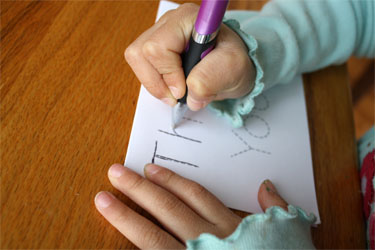
For tomorrow's lesson, we'll talk about printing. More specifically, thank you notes.

Here's a DIY I found on Skip to My Lou's wonderfully creative blog. A wonderful idea for those cold, rainy January days. I also use a font called "Dots and Dashes" that came in a teacher fonts cd.

DIY Thank Yous

from Skip to My Lou

I found this great font called Quicksand. It can be downloaded for free here.

Tuesday, January 12, 2010

A Penny for Your Thoughts


Curly and I have been talking about the letter "M" this week. We made muffins, tested magnets and talked about money in all its magnificent glory.

Here's his new bank that we made using an empty yogurt container and the coin labels I give to my first graders. He got to put in a nickel for helping me feed the dogs. (I accidentally typed "gods" at first. I hope he'd get more than a nickel for feeding the gods.)

As a teacher I always suggested to parents that they not forget to do the simple things like balancing their checkbook or paying for groceries with cash in front of their kids. All our little bankers see nowadays is how we flash this card-thingy and we get to take something home in return. They're not privy to the statements, the bills or the fretting about how to make ends meet.

When you go to the store with your child or when you're pumping gas, make them a part of the experience. Talk about the cost of items, debate whether the brand name is worth the difference, watch the numbers scroll as the tank fills up. Be sure to follow-up and let them see you paying your bills, either online or on paper. Don't assume that because they see money they know money.

Check out this link from BabyCenter that talks about ways to extend those teachable moments.